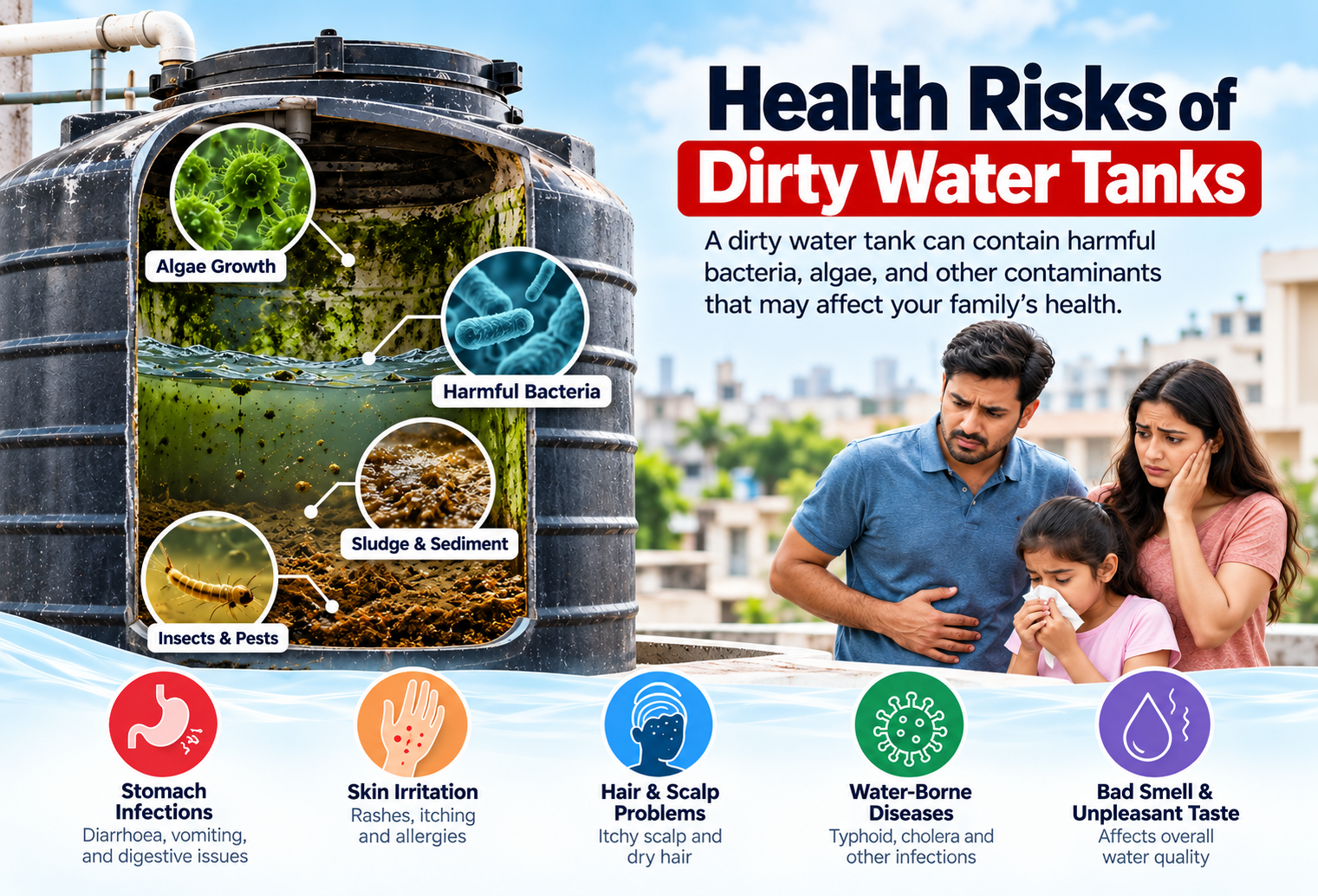
Health Risks of Dirty Water Tanks
In this blog, we have discussed the top health risks of dirty water tanks, some common indications that point towards a dirty water tank and why you must regularly invest in professional water tank cleaning.
How can a water tank get dirty?
There are various reasons as to how a water tank can get dirty.
A clean water tank can still hold sediments that can mix with the water and result in formation of sludge.
Some of the common causes include:
• Dust
• Algae
• Bugs
• Rust
• Sediments
• Improper drainage
• Time gap between cleaning
• Dead bugs
• Insect infestation
• Untimely sanitization
When the water tank is not cleaned for months at a time, it can get dirty.
Why dirty water tanks can be harmful
One of the main issues with a dirty water tank is that sometimes, you can't see it coming.
The water may look perfectly fine but, there could be bacteria, germs, and impurities that may have mixed with it.
In certain cases, a neglected water tank can turn out to be a breeding ground for bacteria and germs.
This contaminated water is not only unfit for drinking, but it also has the potential to impact health adversely.
Water that comes out of a dirty water tank can be used for drinking, cooking, brushing, bathing, washing utensils, cleaning vegetables and fruits, cutting vegetables and more.
For homes, apartments, societies, offices, schools, hospitals, hotels, and more, maintaining water storage hygiene is very important.
1. Risk of bacterial infection
A dirty water tank is among the topmost reasons for bacterial infection.
If the water is held in a dirty water tank, there are higher chances of bacteria multiplying due to impurities such as sludge.
In addition, a dirty water tank can also lead to digestion-related problems.
Some of the common symptoms of bacterial infection may include:
• Stomach pain
• Diarrhea
• Vomiting
• Nausea
• Indigestion
• Weakness
Individuals such as kids, senior citizens, and people with weak immune systems may find it difficult to deal with bacterial infections.
Regular cleaning of a water tank helps to prevent the accumulation of impurities that can contribute to bacterial infection.
2. Risk of water borne diseases
Water borne diseases can occur if a person consumes contaminated water. Dirty water tanks can be one of the major reasons for such diseases.
In addition, improper water storage can also result in water borne diseases for large-scale such as in an apartment or a hotel.
There are several diseases related to water that can prove to be harmful for people and their families.
With the increased use of the water that comes from a dirty water tank, the chances of people being infected increases.
Some of the common diseases may include infection-related problems such as indigestion.
Water storage hygiene is very crucial in locations where water is used for large-scale such as schools, hospitals, hotels, offices, restaurants, factories, hostels, and more.
Professional water tank cleaning helps to keep the water tank in good condition and prevents water borne diseases.
3. Risk of skin irritation and allergy
Not only is dirty water unfit for drinking, but it can also irritate the skin.
Sometimes, people can get allergic to a dirty water tank. When water that has germs, impurities, and bacteria is used for bathing, it can result in several skin-related problems.
Some of the common problems may include:
• Itching
• Dryness
• Rashes
• Skin irritation
With sensitive skin, one may experience several problems. Keeping the water tank clean can help prevent such skin irritations.
4. Risk of hair and scalp problems
People may not be aware of the fact that a dirty water tank may also contribute to hair and scalp problems.
If the water tank has impurities such as algae, sediment, dirt, and more, the water that comes out of it can impact the hair and the scalp adversely.
Some of the common problems may include:
• Itchiness
• Dry hair
• Rough hair
• Scalp irritation
• Unpleasant odor or smell
While there are various reasons for hair and scalp problems; maintaining water storage hygiene can help prevent some problems that occur due to unclean water.
5. Risk of algae
Algae can grow in a water tank if the sunlight is reached inside it. Sometimes, people can mistake algae for dirt, but it can be harmful too.
Algae can turn the water green and foul-smelling.
Algae is a common problem for people who have underground water tanks, RCC water tanks, or water tanks with a top.
Some of the common reasons for algae may include:
• Sunlight
• Dirty water tank
• Moisture
• Poor drainage
• Leftover water in the tank
• Poor maintenance
• Poor sanitization
Algae can affect the water storage hygiene and may cause problems. It is important to prevent algae from growing inside a water tank.
6. Risk of sludge and sediment
Sludge can be a big problem for those who have water tanks.
Sludge is a by-product of dust, sand, dirt, rust, and more that settles at the bottom of the water tank.
Some of the common causes of sludge may include:
• Sand
• Dust
• Leftover water
• Lack of cleaning
• Poor drainage
• Poor maintenance
• Sediments
• Rust
When the water in the tank is agitated, the sludge can mix with water.
As a result, the water can appear cloudy, brown, or dirty with particles in it. It is important to remove sludge and sediments at regular intervals in order to maintain the hygiene of the water tank.
7. Risk of bad odour and taste
A dirty water tank can result in bad odour and unpleasant water taste.
When the water is contaminated, it can result in bad odour.
Some common causes of foul-smelling water may include:
• Algae
• Germs
• Bacteria
• Insect infestation
• Sediments
• Stagnation of water
• Poor drainage
It is important to keep the water tank clean in order to avoid bad smell in the water.
8. Risk of insect infestation
Insect infestation can occur in a water tank if a proper water tank cover is not in place.
The problem can occur due to multiple reasons such as cracks and crevices in the water tanks, poor maintenance, and more.
Some of the common bugs that can infest a water tank may include:
• Mosquitoes
• Flies
• Insects
• Bugs
• Larvae
It is important to prevent such problems in order to maintain the hygiene of the water tank and the water that comes out of it.
9. Risk for kids and elderly
Kids and elderly are more prone to diseases. They do not have a strong immune system like adults.
Therefore, it is important to keep the water tank clean and provide them with safe and healthy water.
It is important to take extra precautions when it comes to the water tank hygiene for kids, elderly people, and people with weak immunity.
10. Risk for food and water preparation
The water that is kept in the water tank is not only consumed as it is, but it can also be used for preparing food and water.
Keeping track of the water tank hygiene is important as dirty water can spoil food and water.
In addition, it can also impact the health adversely.
For example, hotels, canteens, and restaurants must keep track of the water tank hygiene as they use a lot of water to prepare food and water for their customers.
How to tell if a water tank is dirty
If you notice a bad smell in the water coming out of the tap, then it can be a sign for dirty water tank. Other common indications can include:
• Bad odour
• Cloudy water
• Particles in water
• Green algae
• Sludge
• Insect infestation
• Unpleasant taste
• Stained walls
• Time since last cleaning
Even if you do not see some of the common indications such as bad smell and bad taste, it is important to get your water tank inspected and cleaned by professionals.
How often should a water tank be cleaned
The frequency of water tank cleaning can vary depending on various factors such as:
• Tank material
• Type of water tank
• Size of the tank
• Water usage
• Tank location
• Water source
• Tank condition
Most people who own a water tank opt for periodic cleaning instead of waiting for the tank to get dirty.
The tank cleaning frequency can vary depending on the amount of sediment in the water, the amount of dust, and more.
Some tanks may require frequent cleaning if:
• Water contains a lot of sediment
• Tank is exposed to a lot of dust
• The tank is heavily used
• Tank is not sealed
• Tank develops algae fast
• Tank hasn't been serviced in a while
Why professional water tank cleaning is better
While a normal cleaning can help remove visible dirt, it can still leave the tank dirty. Therefore, it is important to go for professional water tank cleaning.
When you hire a professional water tank cleaning company, they clean the tank meticulously and make sure that there are no germs, bacteria, insects, or dirt left behind.
A professional water tank cleaning service will use the right tools, equipment, and techniques to clean and sanitize your water tank.
Such water tank cleaning companies offer a wide range of services for water tank cleaning, maintenance, and more.
It is important to go for professional water tank cleaning when the tank has sludge, dirt, and sediments that cannot be removed during a manual cleaning.
Professional water tank cleaning is a must if you have:
• Underground water tanks
• RCC water tanks
• Commercial water tanks
• Society water tanks
• Industrial water tanks
• Overhead water tanks
Water tank cleaning for residential societies
Housing societies tend to store water in large water tanks to provide water for all the residents.
If the large water tanks are dirty, then a large number of people can get impacted by it.
It is important for housing societies to keep track of the water tank hygiene and get the tanks serviced on a regular basis.
Water tank cleaning for schools and hospitals
Schools and hospitals are two of the busiest places in terms of water usage. Keeping track of the water tank hygiene is crucial for such places.
If a water tank is not properly maintained, then it can result in waterborne diseases for kids and old-age people alike.
As a result, it is important for schools and hospitals to keep track of the water tank hygiene and get the tanks serviced on a regular basis.
Water tank cleaning for hotels and commercial properties
Hotels and commercial properties such as malls, restaurants, offices, and more require clean and healthy water to provide the best experience for their customers.
Failure to maintain water tank hygiene can impact their business adversely.
Therefore, it is important to keep track of the water tank hygiene for commercial properties.
Water tank cleaning tips
It is important to clean a water tank on a regular basis, but it can also be prevented.
Keeping track of the following tips can help:
• Maintain a clean environment around the water tank
• Keep a tight water tank cover
• Keep an eye on cracks
• Avoid keeping water tanks in direct sunlight
• Clean the water tank on a regular basis
• Keep an eye on algae
• Check the inlet and outlet
• Avoid keeping the tank dry for a long period of time
• Maintain proper drainage
• Hire professional cleaning services
FAQs
Can dirty water tanks cause any health problems?
Dirty water tanks can lead to bacterial infection, water borne diseases, skin allergies, hair and scalp problems, foul smell, and more.
How do I know if my water tank is contaminated?
Some of the common indications of a contaminated water tank can include foul smell, bad taste, cloudy water, particles in water, algae, and sludge.
Can I trust clear water from my water tank?
Sometimes, water in the tank looks fine but, it can still be contaminated.
Can dirty tank water lead to skin problems?
If the water that comes out of your tank is of poor quality, then there is a chance for irritation, itching, and allergies.
Should apartment societies clean water tanks on a regular basis?
Apartment societies have water tanks that are used by many people.
It is important to get them serviced on a regular basis.
it necessary to get professional water tank cleaning done?
If your water tank has sludge, dirt, algae, and more that cannot be removed with a normal rinse, then yes it is necessary to get professional water tank cleaning.
Conclusion
Dirty water tanks bring upon a myriad of problems such as risk of bacterial infection, digestion-related problems, waterborne diseases, skin irritation, algae, foul odor, sludge, and more.
As water is used for drinking, cooking, bathing, cleaning, laundry, and more; it is important to keep your water tank clean and healthy.
Professional water tank cleaning helps to ensure that the water tank is free from sludge, dirt, algae, and other impurities. It helps to maintain better water storage hygiene.
For homes, apartments, residential societies, schools, hospitals, hotels, offices, commercial properties, and more, a professional water tank cleaning is essential.
If you haven't serviced your water tank in a while or you suspect it to be dirty, then contact Tank Clean India to get a professional water tank cleaning service now!
Having a clean water tank means having a healthy water storage system which, in turn, contributes towards a healthy lifestyle.
Having a clean water tank means that you will get clean and healthy water every time.